
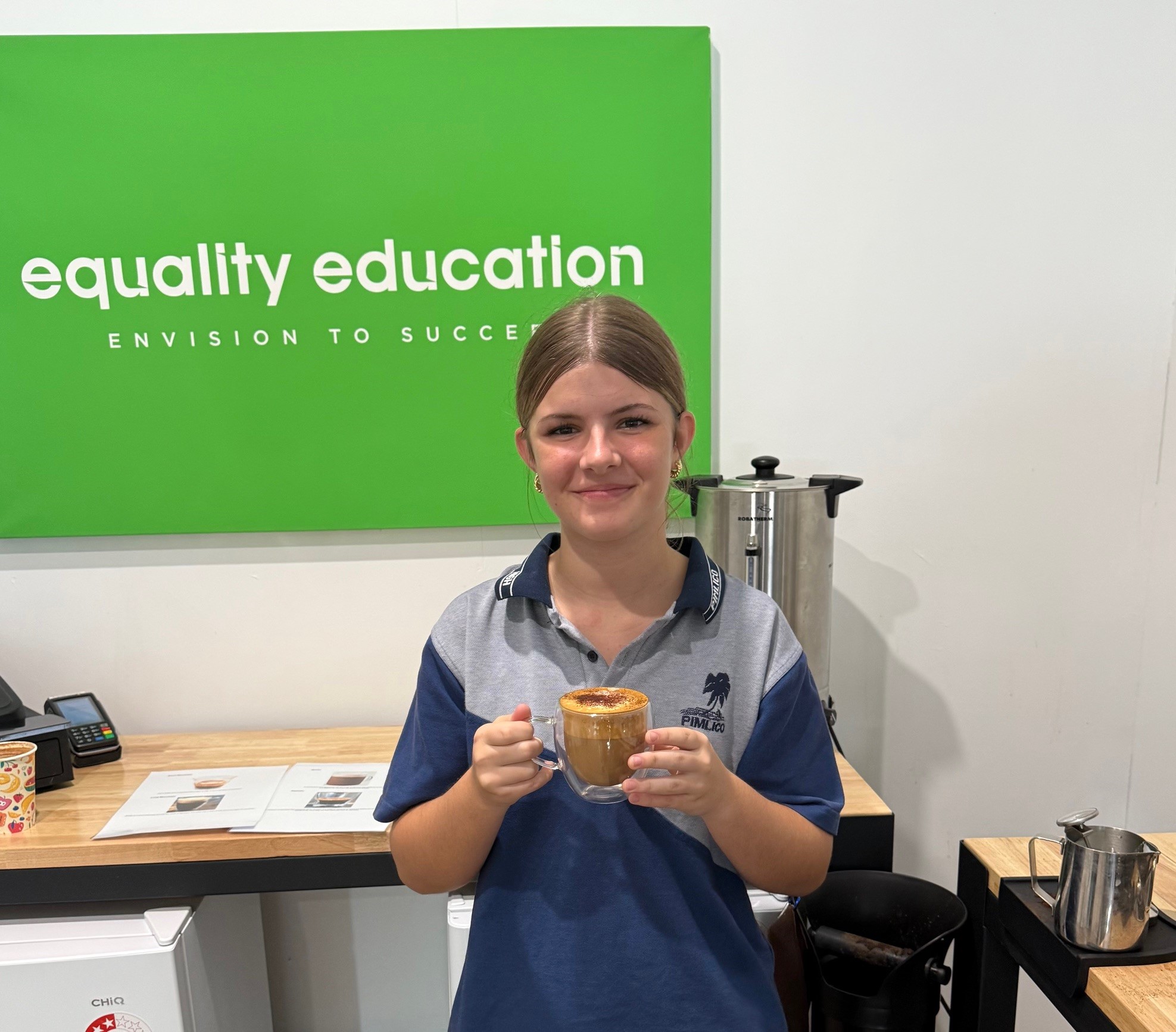
In today’s café culture, social media has played a big role in shaping what people think good coffee looks like. Scroll through Instagram or TikTok and you will see baristas creating incredible swans, tulips and rosettas in cups of coffee. While latte art can look impressive, it has unintentionally created a problem in the hospitality industry. Many baristas are now focusing more on how coffee looks rather than how it should actually be made.
When delivering nationally recognised hospitality training, one of the key messages we share with students is simple: great coffee starts with understanding the fundamentals. Before anyone worries about pouring latte art, they must first understand the correct milk texture and froth levels for each coffee style. This is where many cafés are getting it wrong.
A cappuccino, flat white and latte are not the same drink with a different name. Each beverage has a distinct milk texture and froth level that changes the drinking experience for the customer.
A cappuccino traditionally has a thicker layer of foam. The milk should be well aerated to create a creamy, velvety foam sitting on top of the espresso. When done correctly, the foam should be smooth and structured, giving the cappuccino its signature texture and slightly stronger coffee flavour.
A latte, on the other hand, uses more steamed milk and a much thinner layer of foam. The texture should be silky and smooth, allowing the espresso and milk to blend together. This is why lattes are often served in taller glasses or cups and are known for their smoother, milkier taste.
A flat white is different again. It should have very little foam at all. Instead, the milk should be finely textured and glossy, sometimes described as “wet paint.” The goal is to create a seamless blend between the espresso and the milk so the coffee flavour still shines through.
Unfortunately, many cafés today are serving the same milk texture for every coffee. The only difference is the name written on the cup. This usually happens when baristas are trained quickly or taught by someone who was never properly trained themselves. Instead of learning the science behind milk stretching and texturing, they focus on pouring latte art because it looks good.
But here is the reality: latte art disappears the moment you put a lid on a takeaway cup.
In a busy café environment where most customers order takeaway coffee, the customer never even sees the art. What they do experience is the texture, temperature and balance of the coffee. If the milk is wrong, the drink is wrong, no matter how beautiful the latte art may have looked.
This is why nationally recognised training is so important in the hospitality industry. Proper training focuses on the fundamentals: understanding espresso extraction, milk texturing, correct beverage ratios and consistent preparation methods. These are the skills that ensure every customer receives the coffee they ordered.
Latte art should always be the final touch, not the starting point.
A well trained barista knows that coffee quality comes first. When the milk texture is right, the espresso is balanced and the drink is consistent, customers will come back. And in the end, that is what great coffee is really about.